
Mental Health Awareness Is a Retention Metric Founders Are Ignoring
A founder who tracks churn, burn rate, and engineering velocity down to the decimal but has no read on team mental health is missing the one input that quietly drives all three numbers off course.
Why Mental Health Awareness Belongs on the Same Dashboard as Runway
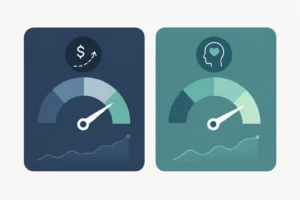
Founders build detailed models for cash runway and hiring plans, yet most Series A companies run with zero visibility into the mental health load their team carries through a compressed, high-stress growth phase. Mental health awareness isn’t a soft HR initiative sitting outside the core business — it’s a direct input into the metrics founders already watch, since a team member operating under unaddressed chronic stress produces measurably worse output than the same person operating with support in place.
The American Psychiatric Association’s ongoing workplace mental health research has found that untreated mental health conditions cost US employers billions annually in lost productivity, driven primarily by absenteeism and “presenteeism” — showing up but working at reduced capacity. A Series A team is small enough that even one or two people operating at reduced capacity shows up directly in shipped features, response times, and the overall pace a founder is trying to protect during the hardest growth window the company will face.
Mental health awareness also intersects directly with retention, a metric every founder already tracks obsessively for customers but rarely applies to their own team. Gallup’s workplace research has consistently linked high stress and burnout to voluntary turnover, finding that employees experiencing high burnout are significantly more likely to be actively job searching or already looking to leave, regardless of how much they otherwise like the role or the mission. Replacing a senior engineer or a first sales hire during a Series A ramp costs months of lost velocity and a real recruiting spend that a modest investment in mental health awareness and support could have prevented.
The founder’s own mental health belongs inside this same frame, not as an afterthought but as the first variable. A 2015 study led by Michael Freeman, published in Compensation & Benefits Review, surveyed entrepreneurs and found meaningfully higher rates of self-reported depression, anxiety, and ADHD symptoms compared to a matched comparison group, tied specifically to the sustained uncertainty and high-stakes decision-making founders operate under for years at a stretch. A founder ignoring their own mental health while building a mental-health-aware culture for the team is treating the company’s most critical single point of failure as exempt from the same standard.
What Mental Health Awareness Actually Looks Like Inside a Small, Fast-Moving Team

Mental health awareness at a Series A company doesn’t require a wellness department or a six-figure benefits overhaul — it requires specific, low-cost changes that a founder can implement directly. The starting point is language: a founder who normalizes saying “I’m taking Thursday afternoon for a therapy appointment” in the same tone used for a dentist appointment signals that mental health care is a normal part of a functioning schedule, not something to hide or apologize for.
Access matters more than messaging alone. Adding a mental health benefit — an Employee Assistance Program, a subsidized therapy platform like Spring Health or Lyra, or simply a health insurance plan with genuine mental health coverage — costs a fraction of a single missed product deadline caused by an unaddressed burnout spiral on the team. Mental health awareness without access to actual care is a poster on a wall; mental health awareness paired with a real benefit is a functioning system.
Manager training, even informal, changes outcomes measurably. The World Health Organization’s guidance on mental health at work specifically recommends training managers to recognize early signs of distress and respond with support rather than performance pressure, since a manager’s response in the first conversation about a struggling team member often determines whether that person seeks help early or waits until a crisis forces the issue. A founder running a ten-person team is, functionally, every manager in the company, which makes this training relevant to the founder directly, not just to future people-ops hires.
Workload visibility closes the loop. A founder who tracks sprint velocity but has no read on who’s consistently working nights and weekends is missing the leading indicator that predicts burnout before it shows up in the metrics that lag behind it — missed deadlines, quality drops, resignations. Mental health awareness at the team level means building a habit of checking in on workload distribution the same way a founder already checks in on burn rate, on a fixed cadence rather than only when something visibly breaks.
Real example: Basecamp has published extensively, through founders Jason Fried and David Heinemeier Hansson’s writing, about deliberately building a company culture around sustainable, non-heroic work hours specifically to protect mental health and long-term output, arguing publicly that a culture glorifying overwork produces worse results over any multi-year horizon than a culture that protects rest and boundaries from the start. Their public writing frames this not as compassion for its own sake but as a direct operational choice tied to retention and sustained output — the same ROI argument any Series A founder already applies to other resourcing decisions.
The Business Case: Mental Health Awareness as a Cost-Saving Decision, Not a Cost Center
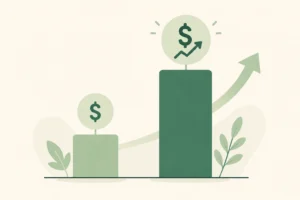
Founders evaluate every initiative against ROI, and mental health awareness holds up under that same scrutiny better than most founders assume before they run the numbers. The World Health Organization estimates that for every dollar invested in scaled-up treatment for common mental health conditions like depression and anxiety, there is a return of several dollars in improved health and productivity, a ratio drawn from multi-country economic modeling on workplace mental health interventions.
Recruiting cost alone justifies the investment at Series A scale. Replacing a mid-level engineer typically costs six figures once recruiting fees, lost productivity during the vacancy, and onboarding time for the replacement are added together, according to workforce research consistently cited by SHRM and other HR research bodies. A founder who prevents even one burnout-driven departure through basic mental health awareness and access to care recoups the cost of a company-wide mental health benefit many times over.
Product quality and shipping velocity track the same pattern indirectly. A team operating under chronic, unaddressed stress makes more errors, ships slower, and communicates worse across functions — the exact failure modes a founder blames on process problems or skill gaps when the root cause is often unaddressed burnout compounding across the team for months before anyone names it. Mental health awareness, treated as an operational input rather than a values statement, gives a founder a lever on these same failure modes that process fixes alone don’t reach.
Fundraising even factors into this calculation, though founders rarely connect the dots. Investors increasingly ask about founder and team wellbeing during diligence, not out of altruism but because burnout-driven founder departure or key-employee turnover during a Series A to Series B window directly threatens their capital. A founder who can speak concretely about mental health awareness practices already in place — a benefit, a manager-training habit, a documented workload-check cadence — answers that diligence question with evidence instead of a vague assurance.
Building Mental Health Awareness Into How the Company Actually Runs

Mental health awareness sticks only when it’s built into existing rhythms rather than bolted on as a separate initiative competing for attention against product and sales priorities. A founder should fold a brief, genuine wellbeing check into an existing weekly one-on-one rather than scheduling a new meeting nobody has time for — the goal is integration, not addition.
Documentation matters more than founders expect. A short, written policy on mental health days, therapy time, and what support exists removes the ambiguity that keeps struggling employees silent — people disclose and seek help far more readily when a clear, written policy already exists than when they’d be the first to test an unwritten, assumed norm. Mental health awareness without a documented policy relies on every employee correctly guessing what’s actually acceptable, which most won’t risk testing under pressure.
Leading by visible example carries more weight than any policy document. A founder who takes a real vacation, logs off at a reasonable hour most nights, and openly discusses their own therapy or stress-management practice gives the team explicit permission to do the same, while a founder who preaches mental health awareness publicly but visibly works through every weekend undercuts the message with every visible action.
Crisis planning belongs in this system too, even though founders hope never to need it. A brief, clear process for what happens if a team member discloses a mental health crisis — who they talk to, what resources exist, how the company responds — removes the scramble and improvisation that happens when a founder faces this situation unprepared for the first time. Mental health awareness that only exists as a general cultural value, without a concrete crisis process behind it, fails exactly when it matters most.
Mental health awareness isn’t a values statement competing for a founder’s attention against product and growth — it’s a direct, measurable lever on retention, output quality, and the founder’s own capacity to keep making sound decisions through the hardest years of building a company. Build the policy, model the behavior, and let the retention numbers confirm what the research already shows.
Written by Choweats.com